AI in Recruitment
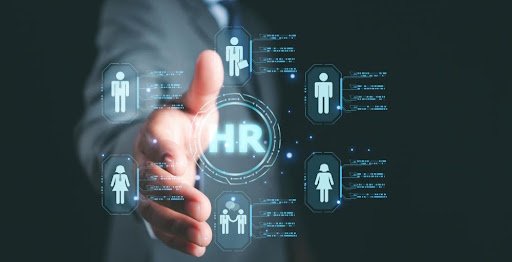
Companies are implementing AI in the redesigning of the recruiting, filtering, hiring, and managing of employees within organizations. The normal recruiting process consists of sifting through various resumes and interviewing each individual. Recruiting AI technology is useful in streamlining the process, reducing time and making choices.
Artificial Intelligence implementation in the HR department begins from the intelligent filtering of resumes to the scheduling of interviews and analysis of employee data. Simply automating the process alone does not provide good outcomes. Companies should be careful to ensure that they use policies and procedures that are fair, clear and secure.
These are some of the recommendations for companies using these technologies.
How to Explain AI in Hiring and Human Resources Technology
AI in recruitment implies that the computer can conduct an analysis of information, detect the pattern, generate content, and assist in making decisions concerning hiring. The features are gradually integrated into various applicant tracking systems, resources management and talent sourcing software.
With the use of AI in the hiring process, the managers will have the ability to conduct some operations which they were conducting manually before, such as analyzing the candidate’s profile, detecting the necessary skills, interviewing the candidates and evaluating the efficiency of the hiring process.
For instance, using AI technology, an applicant tracking system can help the company to select people with the necessary skills. Next, the hiring manager will need to analyze the profiles and make the selection.
Nevertheless, the hiring manager will not be replaced by AI technology. This is because AI technology improves the work of HR experts by involving them in the decision-making process.
How AI is changing our hiring practices
Automated CV screening and candidate matching
The analysis of the resumes is one of the most consuming processes in recruiting candidates; moreover, this task takes up a lot of time, particularly when there are many resumes. As far as I am concerned, recruiters spend hours on performing this task. AI-powered recruiting solutions allow extracting the information from the resume, finding the needed qualifications, and checking whether the skills stated by the candidate match the needs of the position. Some of the advanced solutions can even determine those skills which can be called otherwise. For example, the recruiter looking for the marketing specialist can use AI for finding the experience in search engine optimization, campaign management, analytics, and content strategy. This will help recruiters filter the candidates, and at the same time, criteria for the selection process should be developed very carefully because it is possible that some candidates have a nontraditional career background.
AI-Driven Interview Scheduling
Scheduling interview appointments for both the recruiters and the hiring manager as well as the candidates might take a lot of time. AI recruiting software will help in scheduling the entire process of setting up appointments, checking their availability on the calendar, sending an appointment, sending invites, and sending reminders about the interview appointment. The chatbot will help in answering all questions related to the interview appointment and hiring process.
Job Titles and Recruitment Marketing Smarter
Be precise with your job description so that you can reach out to the right people. Generative artificial intelligence can help the recruiters in making job advertisements which are clear and understand the requirements. The AI can help in crafting emails to reach out to candidates and in conducting interviews as well.
The AI-generated description is always checked by a person. It is important for the recruiters to be sure about what requirements and qualifications the job description needs to meet and not put obstacles in front of the candidates.
The Future of HR and AI Tech
Predictive Analysis for Better Hiring Decisions
HR teams will be able to discover hidden patterns in recruitment data through AI-related measurements such as time-to-hire, conversion ratio of candidates and effective recruiting channels.
The analysis of the workforce makes it possible for the organizations to predict their personnel needs and possible skills shortages. For example, there may be a need to expand the customer service department of an organization. In the future, HR professionals will be able to make a recruitment plan based on past hiring information and company needs.
Surely, this information is valuable during the planning stage. Predictions do not equal certainty. It is possible that the recommendations made by AI will be incorrect due to changes in the business environment, incorrect assumptions or poor quality of information.
Onboarding and Employee Training Personalized
AI also changes the onboarding process. HR software can remind the employees about onboarding procedures, gather necessary documentation, answer employees’ questions and give them personal learning materials relevant to their positions.
Workforce Planning and Employee Support
HR department technology of today is getting increasingly integrated to incorporate the records of the staff, work force analytics, and AI-enabled assistance. Staff members may ask about company policies and other information related to the procedure of taking leaves and benefits.
In case the software is used efficiently, it would save the HR representatives a great deal of time that would have been spent on interacting with staff members.
Advantages of AI for HR and Recruiting Applications
Increased Efficiency & Productivity
By automating the tiring tasks, it can become easier for the recruitment team to undertake the task. Through automation, you can decrease the effort needed to screen the resume, interview candidates, interact with them, and generate standardized reports.
Thus, there is enough time left for the recruiters to evaluate the candidates and develop a strategy for hiring.
A uniform hiring process
AI-assisted workflow makes it possible for organizations to define criteria that can be applied to the job in question in every instance. Consistency does not necessarily mean fairness. It is necessary to monitor the performance of criteria and systems in order to achieve the desired results.
Enhanced candidate experience
The candidates are interested in communication, immediate feedback, and an easy application process. This can be done through thank-you letters, help in scheduling, and reminders. Organizations have to automate to ensure that the candidates can still reach out to people.
Data‑Driven HR Management
From the analysis of the data via intelligence, firms will be in a position to know from which sources their potential candidates come from, what problems exist in their recruitment processes, and new skills. The Human Resource department will be able to tailor its recruitment campaign and resource allocation effectively.
Obstacles to Using AI in Recruitment
Fairness and Algorithmic Unfairness
The information used in recruiting can be. The AI system is trained based on this information. Without this kind of control, the system may become a biased one.
It will discriminate against certain applicants. The employers have to verify the recruitment process based on its results. Only those criteria which are associated with the job should be considered.
Data Privacy and Security
Examples of information held in recruitment software include contact details, employment experience, qualifications, and results from interviews.
It is important for organizations to make sure they collect all the relevant information, secure access to this information, keep the information collected properly, and consider how their technology providers manage candidates’ information.
Over‑reliance, on automation
The algorithm may make mistakes since there may be a chance for it to misread the data and the information required to reach an informed decision regarding the candidates.
It is left to the recruiters to evaluate the results produced by the algorithms and the decisions made after their evaluation. It is important to have a process for clearing out any misunderstandings by the candidate.
Artificial Intelligence Best Practices in HR
An approach can help companies with AI implementation:
– Define clear objectives: Pick a particular problem to solve, such as shortening the time needed to schedule interviews or enhancing communication with candidates.
– Select the HR software: It should offer integration capabilities, security features, reporting functions and be user friendly.
– Always involve humans: Listen to advice from qualified HR professionals because they make the final hiring decision.
– Monitor performance and fairness: Regularly check accuracy candidate outcomes and any signs of bias.
– Train HR teams: Teach staff about AI tools, what they cannot do and how to protect data.
– Be honest about using AI in recruitment and give candidates proper chances to ask questions.
Organizations can adopt a phased approach: test results, fix problems and scale cases instead of automating every part of recruitment right away.
The Future of AI in HR & Recruitment Tech
There will be an increased use of AI in recruitment technology, talent management, and workforce analytics. The recruiters will be able to find, evaluate, interview, and onboard the recruits in one technological system.
The human factor is very important in this case. It is the time when the recruiter’s experience is used to make the decisions that machines cannot make.
The automation process is well-managed, good at communication, and well-monitored by humans. These companies will flourish.
Frequently Asked Questions (FAQs)
What is AI for recruitment?
Use of AI in recruitment includes resume screening, candidate matching, job posting, scheduling interviews, communicating with candidates, recruitment analytics, and workforce planning. There are some functions that depend on the software. How the employer deploys the software.
Will AI Replace Recruiters and HR?
Use of AI can perform certain tasks, but cannot replace the judgment, empathy, relationship building and contextual understanding that you need in the recruitment process. AI cannot be used to take away the element from the hiring process. The fundamental use of AI is to assist the HR professionals.
What are the main risks of using AI in HR technology?
The most common risks associated with the application of AI are AI bias, incorrect predictions, data privacy concerns, a lack of transparency, and over-reliance on automation. In order to reduce these risks, businesses can choose proper software and evaluate its performance, protect data and maintain sufficient human oversight.
About the Author